
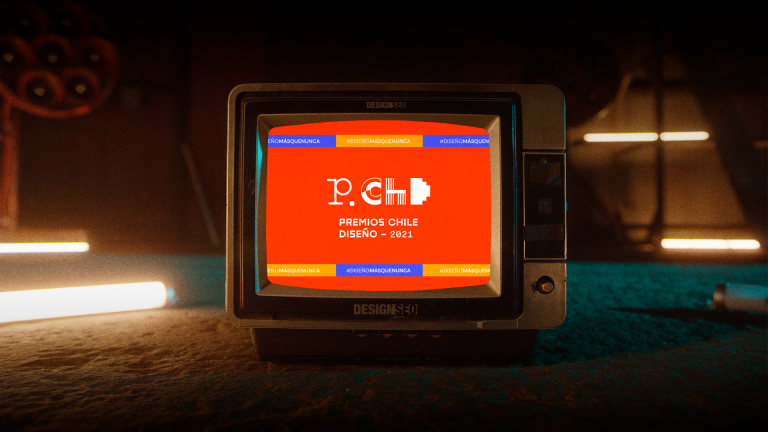
The eighth edition of the Chile Diseño Awards was held in 2021 under the slogan “Design more than ever.” It highlighted design as a tool for adaptation and transformation. This is a historical article: the call for entries for that edition is closed. We bring together its context and lessons for documenting design projects; this does not announce an open call for entries.
What were the Chile Diseño Awards 2021?
Chile Diseño, the trade association of design companies, promoted this edition to highlight the discipline’s value. Its historical presentation noted sixteen years of activity, more than two hundred recognized projects, and more than two thousand eight hundred accumulated entries. These figures described the competition’s history, not the number of projects reviewed in that call.
The slogan Design more than ever as a reading of the context
The slogan positioned design in relation to new needs and behavioral changes. From an editorial perspective, that approach invites us to evaluate how an interface, product, or service helps solve a specific problem. In digital projects, strategic UX/UI design makes it possible to research and organize that experience.
How to document design as a driver of change
As an editorial recommendation, describe what changed and with what evidence. Signage can be evaluated by ease of orientation; packaging, by protection and material use; an interface, by understanding and completed tasks. These are examples of analysis, not award-winning cases or an official jury rubric. The visual result can also have value even without sales measurement.
Organization and context of the competition
The association’s history provides a framework for learning about projects and teams in the sector. The following sections combine historical information with Agencia Cero’s recommendations for presenting and evaluating design. These recommendations do not replace the rules or describe official requirements unless a source is indicated.
Professional and academic categories in the eighth edition
The official 2021 list included twenty-four professional and two academic categories. It grouped identity, packaging, information, editorial, typography, services, spaces, products, and digital formats. The academic categories distinguished student work and research.
Identity, packaging, information, editorial graphics, and typography as the system’s foundation
These areas let us observe different facets of design: identity and recognition, information on packaging, orientation, editing, and readability. To document a project, it helps to explain decisions and show their application. In branding, for example, a useful presentation connects strategy and identity with the media where the brand is used. This interpretation should not be presented as a list of official evaluation criteria.
A criterion that unites these five categories even when they seem different
A cross-cutting perspective asks whether the proposal is understandable and works in its context. Information hierarchy matters in a publication as much as in an interface. In strategic UX/UI, that question can be explored through research and user testing.
Services, experiences, environments, spaces, and products where design becomes tangible
When analyzing services, spaces, and products, document the context of use and design decisions. Experience maps, photographs, or prototypes can help explain the work where relevant. Materials required for an entry must be confirmed in its rules; they should not be inferred from an editorial recommendation.
Online, audiovisual, interactive games, and brand implementation as a sign of the times
The edition included online formats, audiovisual work, and interactive games, as well as brand implementation in digital media. To study a case in these areas, describe the experience and the role of identity, content, and interaction. The review should fit the project type, without reducing its value to advertising reach or conversions.
Why brand implementation is not about running more ads
In brand practice, it helps to distinguish reach from consistency: a system of templates, tone, and components can help maintain an identity across channels. Its usefulness should be evaluated according to goals and context, without claiming that it is worth more than another campaign because of its budget.
Academia and research as a breeding ground the award does not leave out
The academic categories provided space for student work and research projects. This makes it possible to discover proposals at stages and in contexts different from professional practice. When comparing cases, consider resources, purpose, and degree of implementation so as not to demand the same evidence from work of different kinds.
How to analyze a project’s impact
The competition highlighted economic, social, cultural, and environmental dimensions. As an analytical framework, these can help explain whom the project benefits and what evidence supports its contribution.
Economic, social, cultural, and environmental perspectives that explain what design accomplished
In an editorial evaluation, the economic dimension may examine efficiency or viability; the social, access and participation; the cultural, identity and memory; the environmental, materials and life cycle. Select indicators appropriate to the project, state their limitations, and avoid presenting estimates as verified results.
How to submit an impactful entry without inventing metrics you do not have
State the baseline, intervention, and change with a source. If you do not have a hard number, state a verifiable proxy: waiting time before and after, complaints per month, adoption on first use. Inventing ROI without a basis reduces credibility; declaring an honest proxy with a source adds to it.
How to document a design case
The recommendations in this section help prepare a portfolio case or a future presentation. They are not an invitation to enter the eighth edition, which is already closed. For any new call, check its own requirements, categories, and schedule.
What period did the 2021 edition accept?
The frequently asked questions for that edition specified projects implemented, executed, or brought to market between January 2019 and December 2021 that had not participated in the 2019 awards. The academic student category included an exception for unexecuted ideas. Do not apply these conditions to other editions.
What a case should contain to be understood in minutes
Explain the context, problem, constraints, design decisions, implementation, and available evidence. A clear structure can open with the challenge, show the initial situation, describe the intervention, and close with results and limitations. On a strategic website, this organization helps visitors understand the case without relying on superlatives.
Mistakes that make a case hard to understand
Vague descriptions, images without context, and results without sources make evaluation difficult. Adapt the presentation to the relevant category. The historical FAQ allowed participation in several categories with separate registrations, so it would be incorrect to state that a single category was a mandatory rule.
Where to consult rules and calls for entries
Always consult the official Chile Diseño site and check the edition’s year. A historical archive may retain old forms or dates. Review the relevant rules before preparing materials or interpreting a deadline as current.
Lessons for brands, studios, and companies
The edition invites us to view design through its context and contribution. For studios, documenting during a project makes it easier to explain decisions later. For companies, reviewing cases with process, limitations, and evidence helps discussions with a potential provider. An award provides a reference, but does not replace evaluating the team’s suitability for the assignment.
How to use design cases to evaluate a provider
Select comparable projects and ask about the problem, process, responsibilities, and evidence. Also review collaboration, accessibility, and maintenance when relevant. If you need to develop an identity and its applications, you can explore Agencia Cero’s branding service to discuss your project’s scope.
The value of this historical review lies in learning to explain design work clearly. To discover recognized projects, review the results of the eighth edition. If you want to participate in another call, verify its current rules and dates with the organization.



